The
History of The Real Mattress and Base Co. Extracted
from an High school history assignment by Elizabeth Cater, August-October
1999.
Part
One: Eric Marr and Eileen Roberts Beginning
Eric Marr was born at Byron Bay in NSW on the 14th of June, 1911. He attended
the local Convent School until he was 12, then his family sold their farm
and moved down south to the suburbs of Sydney. After six months of holidays
on the beaches of Manly and a temporary move to Haberfield, the Marr family
settled down in Enfield. By this time Eric had reached the age of 15, and
wished to apply for a job as a mattress maker apprentice. He was underage,
so he increased his age and said he was 16. The apprenticeship was at Burton
& Wheelers, a bedding factory in Sussex St. Sydney.
Eileen was born in Paddington on the 27th of September, 1910. At the age
of 14 she left her school, Orange Grove in Annandale, and became a Manchester
sewer: hemming sheets and constructing pillowslips. She was sacked
when she was caught making dolls clothing for her younger sister. Eileen
then applied and received the job of a machinist at Burton & Wheelers.
She was then 15.
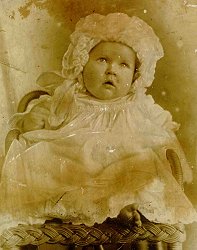
Eileen Roberts,
aged 12 months
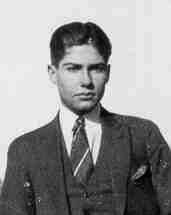
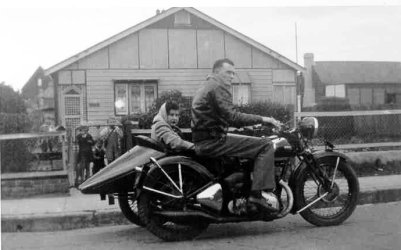
Eric Marr,
circa 1930
Eric
and Eileen Eileen and
Eric met in 1927 one day at work when Eric found that the mattress
case sewn by Eileen was incorrect. He "called her up" to where the mattresses
were constructed and it was apparently love at first sight. Eileen says
that Eric “went home to his parents that night and told them he had met
his wife”. At work, Eric would call up Eileen supposedly to re-sew a case,
just so they had a chance to meet as often as possible. It was during one
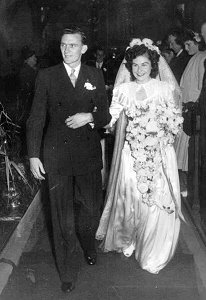
of these meetings that Eric proposed. Eileen consented; she was 18, he
was 17. They were wed at St. Aidens, Annandale in Balmain on the 23rd of
May, 1929. Their first child, Betty Marr, was born that same year on the
28th of December.
Work for Eric
at Burton & Wheelers slackened because of the Depression, but he stayed
with them, making pocket spring units for mattresses. Eventually the pay
and hours were so low there was no point in working. He quit in the year
1930. A year later in 1931, Eileen gave birth to their second child on
the 4th of December, who was called Vincent after his fathers
middle name. Eric
and Eileen moved to Burwood and Eric was re-employed in 1933 by Burton
& Wheelers. He stayed with them for 9 more years.
The
War
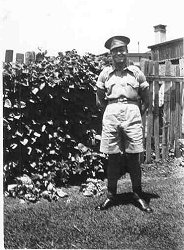
Eric joined the Army and became a bombardier unit in 1942. Corporal Marr,
as he was known, was stationed at Belmore, Homebush and at Townsville in
Queensland. He stayed in the Army until 1945, when World War 2 ended. Eric
then returned yet again to work at Burton & Wheelers.
Terrance Marr was born on the 8th of June, 1946. He was the last of the
Marr children. Two years after his birth, his father quit his job at Bruton
& Wheelers as he was unhappy with the changes made while he had spent
time in the Army. Eric transferred to Nettletons, another bedding company
in Surry Hills. It was there he met Frank Cater, whom he befriended and
eventually introduced to his wife and daughter Betty. Frank and Betty married
in 1949.
When Nettletons closed in the 50’s, Eric applied for, and received, a job
at Anthony Hordens in Sydney. He was the maker of a special mattress for
Mrs Horden that contained 1500 singular springs, and Eileen says that she
(Mrs Horden) described it as “just beautiful”. He continued to work there
until 3 years later he became a warehouse caretaker in York St. Sydney.
After the death of their second child Vince in 1957, he took up a job at
a Bonds factory as a packager. He retired in 1962, but continued to help
his son-in-law in his personal business. The Marrs moved to Enfield in
1970, then to Shoalhaven Heads in 1981. Eric Marr died in 1986 and their
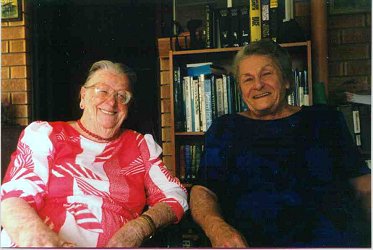
3rd child Terry died two years afterwards in 1988. Eileen Marr and
her only remaining child Betty still live in Shoalhaven Heads. Her present
age is 87.
Part
Two: Frank Cater and Betty Marr Beginning
Frank Cater was born on the 11th of July, 1926, at 23 Rawson St., Enfield
in Sydney. He was the youngest of three: he had a brother named Jack and
a sister named Lorna. After he left school at the age of 13, he job
hopped for five years, working at first in a shoe factory, then a
biscuit factory, then as a pastry cooks assistant and finally at a wool
mill in Marrickville. In the year 1944, Frank left his current job
to join the Air Force. He was stationed at Sydney, Cootamundra, Shepparton,
Sydney again (this time at Croydon Girls School), Narramine and finally
Brisbane until his discharge on the 14th of May, 1946. Frank was
required to complete a Post War Training Scheme.He applied for a mattress
making course at Nettletons in Surry Hills, but was rejected. To keep the
pay cheques consistent, he worked for six months in a Dunlop factory, until
at last he was accepted by Nettletons. It was there that he met Eric Marr,
and consequently his future bride Betty.
Eileen Betty Marr, known only by her middle name, was born on the 28/12/29.
As a child she moved with her parents from her birth town Annandale to
Short Street in Enfield, and then to Shaftsbury Road in Burwood by the
time she was five. Betty attended both the local primary and high schools
in Burwood. When she was 16 years of age she completed her Intermediate
Certificate and left school in 1945. From there she was employed as a sales
assistant at McDowell's department store in George Street, then at Woolworth's
in Burwood and finally at a factory in FiveDock. She was still working
there up until she met Frank.
Frank
& Betty
After completing his post war reconstruction training as a mattress maker
at Nettletons Mattress Factory in early 1947, Frank stayed on and was taught
the trade by Eric Marr, a leading spring hand. He was introduced to Betty,
and two years later they were married at St. Paul's Church in Burwood,
1949. Six months after the wedding of Frank and Betty, Eric encouraged
his new son-in-law to go into the business himself, something that he had
always wished to do but “never had the guts”. Frank and Betty moved to
Plenkivil Street in Bondi, and the business started. They only had 28 pounds
(which is about $56), but Betty obtained a job at Bardens Shoe factory
to help with expenses.
In 1951 their first child Geoffrey Alan Cater was born. When the move was
made to Oxford Street in Burwood 2 years later, Frank was canvassing from
Bondi to Coogee, visiting mainly schools and convents, repairing and remaking
their old horsehair mattresses. His work from one convent enabled him to
do work for most of the Sisters of Mercy in Sydney, St. Joseph's Boys School,
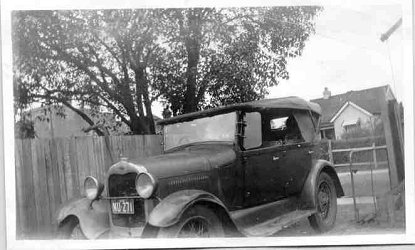
Kings School and Methodist Ladies College. By this time he had bought an
old “A”model Ford from his father-in-law for 100 pounds, and was doing
all his deliveries and errands in it. Late in 1953, David, the second
of the Cater children, was born. Up until his birth, Betty had sewed the
cases for Franks mattresses and accounted for him. Months before and after
the births of all her children, she ceased sewing but continued the book
work. The Marrs and the Caters worked together, with Eric cutting the cases,
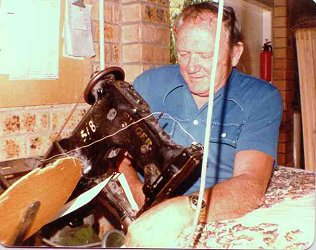
Eileen and Betty sewing them, and Frank filling and finishing them. The
sewing was done on a treadle machine that eventually wore a small electric
motor.
Resthaven
#1
In 1955 land was bought in Enfield, but it wasn't until 1957 that a house,
financed by Franks war service money, was built. The new site gave way
to a new name: Resthaven Bedding. A year later, Betty gave birth to her
first girl and named her Diane. There was also more new work as spring
bases became more and more desirable.
A small “factory” for the manufacturing of mattresses was rented at 138
Liverpool Road in Enfield in 1962. It was a small shop 1000m from the family
home that manufactured a full range of domestic bedding. The company also
provided spring cushions for the expanding caravan industry. Later that
year the Caters visited the coastal town of Shoalhaven Heads.
In 1964 Lynette Cater, the last of the Cater children, was born. The year
also saw the purchasing of an electric powered tape-edger
for the closing
of mattresses that eliminated side stitching.
On December the 24th the year afterwards, a fire ravaged the contents of
the shop, but a short while later it was again fully functioning.
Betty, with her newly obtained drivers license, began to help with the
deliveries in 1966. She completely stopped sewing and concentrated on her
book-keeping also.
Holidays taken at Shoalhaven Heads were so agreeable that a block of land
in Golden Hill Avenue was purchased in 1967 and by Christmas Eric, Frank
and Geoff had constructed a small fibro holiday house. In 1970 Frank and
Betty purchased a shop in the next block at 158 Liverpool road. Two years
later their second son David returned to join them and their business full
time in 1972.
Resthaven
#2
By this time caravan bedding had seen foam replace spring cushions and
an expanding market in county NSW, serviced by two agents. This continuing
prosperity encouraged Frank and Betty to invest in a large block of land
in Davenport Road, Shoalhaven Heads in 1973. By 1975 a brick building was
erected on the land for the future manufacturing of mattresses. After a
period of working part time with the business, Geoff joined his parents
and his brother full time by 1978. David began to work part time again.
In 1979 the business, with the encouragement of Shoalhaven City Council,
relocated to Lot 2 Quinns Lane in Nowra and Frank, Betty, Geoff and Lynette
moved down to Shoalhaven Heads. Lynette attended Bomaderry High School.
The business, despite the move, continued to do well. It was scaled down
to the caravan industry with more work in special sizes and shapes. Several
contracts with the Australian Navy came about and the first antique reproduction
work was done for the Elizabeth Farm situated in Parramatta.
Resthaven
#3
Due to the 1980’s recession, relocation difficulties and a highly competitive
local market, the business found itself relying much more on specialised
work, particularly in Sydney from interior decorators and antique dealers.
It was soon decided to rescale the business to suit this market and in
1984 the factory was moved to the smaller premises at the rear of 39 Davenport
Road Shoalhaven Heads. Two years after settling in, Frank was forced
to retire due to ill health and let his son Geoff take over the company
in 1986. Frank and Betty Cater still live in Davenport Road in Shoalhaven
Heads, and the factory is still used for the hand manufacturing of Real
Bed mattresses.
Part
Three: Geoff Cater Beginning
Geoff Cater was born in Sydney, 1951. His parents were Frank and Betty
Cater. As a child he lived first at Bondi, then moved to Burwood in 1953,
then to Enfield in 1957. He attended the local primary school there up
until 1964, when he went onto a high school in South Strathfield.
Geoff completed his High School Certificate in 1969 and progressed to University
which he attended in Sydney in 1970. After 4 years he completed a Bachelor
of Arts Diploma of Education. Ever since he had gone to primary school
until he finished University he had worked part time in his father Franks
mattress making business, Resthaven Bedding. In 1976 he joined full time,
the shop being situated at 158 Liverpool Road, Enfield.
The
Birth of the Real Mattresses & Base Co.
The Caters moved to Shoalhaven Heads in 1979 and continued in the hand
made manufacturing of mattresses in a small brick building that was erected
behind Frank and Betty's house in Davenport Road. Ill health caused Frank
to retire in 1986, and Geoff took over the company as his own. He changed
(or added) the name Real Beds.
He and his partner Lesley Speed gave birth to two children: Elizabeth in
1984, and James Merric in 1991.
Frank Cater passed
away 22 December.2004
Part
Four: A Short History of Mattress Making Beds
through History
A typical bed of 1600 in its simplest form was a timber frame with rope
or leather supports. The mattress was a “bag” of soft filling which was
most commonly straw and sometimes wool that was covered in plain, cheap
fabric. The more expensive ones of this period had much the same bed frame
- perhaps a little sturdier - with a lower bag of wool and a top bag of
feathers substituting the uncomfortable plain straw mattress. This was
also covered in plain fabric.
During the Renaissance the bed structure was much the same, however the
plain fabric used to cover the mattress progressed to being covered in
a much better quality slip cover. In the mid 18th century, changes were
made. The cover became made of quality linen or cotton, the mattress cane
box was shaped or bordered and the fillings available were natural and
plenty, including coconut fibre, cotton, wool and horse hair. The mattresses
also became tufted or buttoned to hold the fillings and cover together
and the edges were stitched. More expensive beds were much the same but
with two or more layers of straw, horsehair and feathers were laid onto
of each other for extra comfort. These are the types of mattresses that
Eric Marr made and reconstructed.
Iron and steel replaced the past timber frames in the late 19th century,
and better fillings and fabrics were used on the mattresses. Reproduction
of these were also manufactured by Eric. In the 1900’s the beds were either
as above or divan, which were made of individual springs tied into a timber
frame and covered. The mattresses remained much the same. By this time,
both Eric and Frank were constructing these types of beds and mattresses.
The most expensive beds of 1929 were latex rubber mattresses produced by
the very successful “Dunlopillow”. Pocket spring mattresses were also introduced.
These were individual springs sewn into linked fabric bags. By 1950,
Frank was in control of his own company and was producing innerspring divan
bases that were wire units fixed onto timber frames. The mattresses were
also innerspring units that were upholstered and tape-edged with a machine.
Before this time, all the work was done by hand except the sewing of the
cases.
Spring and foam become major components in the 1960’s, and Frank replaced
the previous natural fibres with these. The 1970’s saw the invention of
the waterbed and the take over of foam: the majority of beds were made
with this material. Springs, however, still remained popular yet expensive.
In this period, both Geoff and Frank were working on such beds. Mechanisation
increased greatly in the 1980’s and mattresses and bases were constructed
with the aid of computer production lines.
Real
Beds Currently,
the Real Mattress & Base Co. produce beds that are made with natural
fibres and fabrics such as those that were used in past periods of time.
In each mattress are layers of coconut coir, cotton, polyurethane foam,
wool and spring units. They are covered in damask or a cotton herringbone
twill cover. Their bases have pine timber frames, coconut coir, cotton,
dense cardboard side panels, foam, wool, and hessian, and are also covered
in either damask or cotton covers. Because the Real Mattress & Base
Co. frequently reconstruct antique beds, they are capable of producing
mattresses with cut-out corners to cater for four poster beds or ensembles
to fit existing head and footboards.